More cheerful, or at least their fights sound more charming, are the tiny hummingbirds.
It's hard to get good pictures of them though.
blurry
less blurry but badly framed
Okay, no choice but to try to see them in action...
I can hear them, but maybe not see them.
Wait, one actually almost held still for a moment here!
Oh I give up!
What I was really hoping to see were quail—I love quail!
Alas, no luck for me, but the interwebs can oblige us...
They are so danged cute!!
Er... I mean... Majestic! That's it—majestic!
(hee hee hee, quail-head!)
One fine-looking Qouple.
They all remind me of my high school boyfriend Marcus, whom we called Old Quail-Head because he had one little bang just like a quail head-feather. I'll have to find a way to scan a picture so you can see what I mean, but for now, this guy below will have to do.
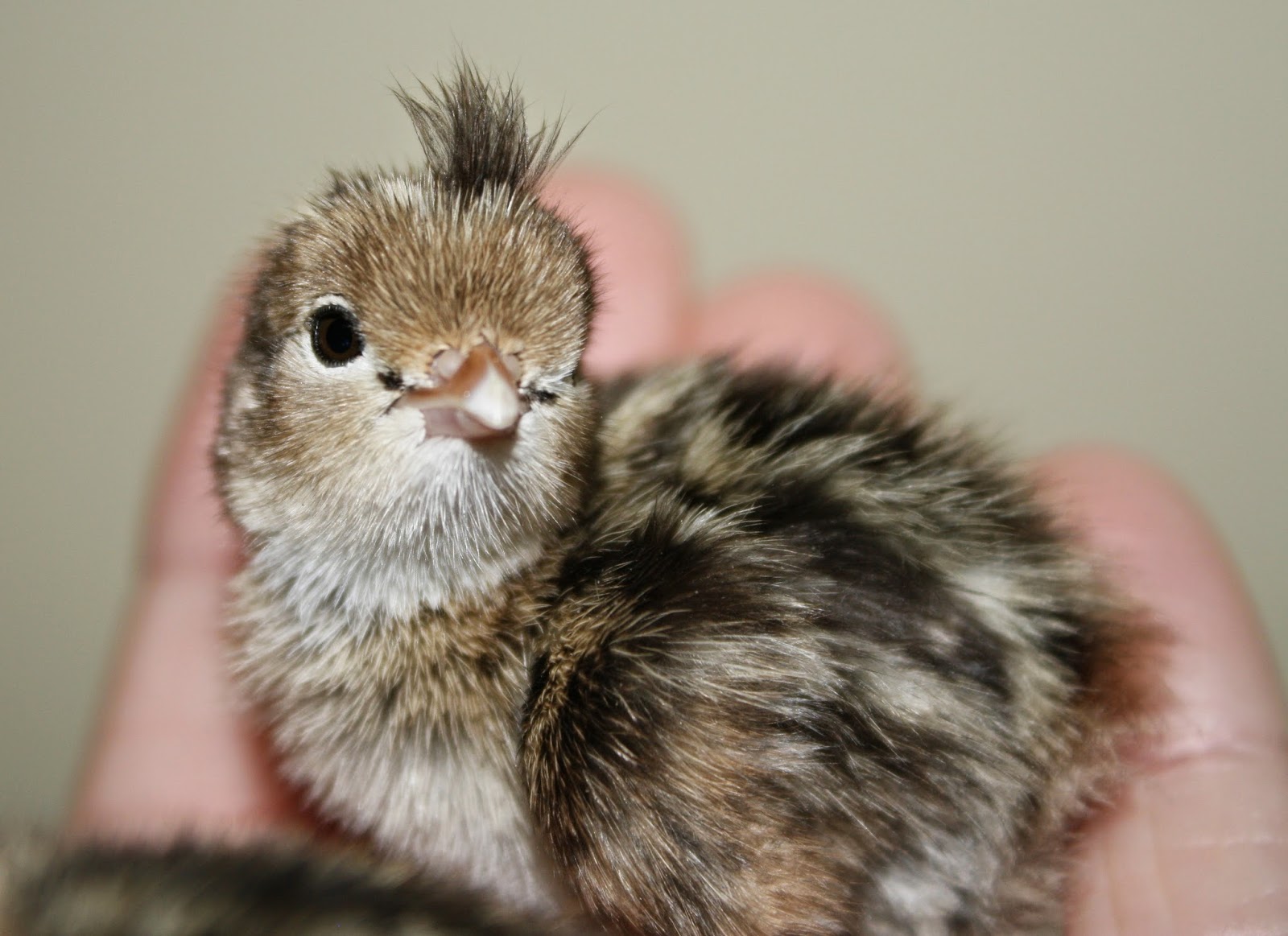
And here are some babies. Their mama is less than a foot long, so they must be 2" tops. Hee hee hee!
Here's where they live
Here's one on his or her mama's back!
(That looks like another child I know)
An independent fellow...
"I have a feather... coming!"
and one little honey showing off its head-tuft. Let's call him Peter Quince.
Awwwwww.... quailies! hummies! kestries! No, that last one doesn't work. Kestrels will eat these other guys if they can. Hmmmm.... maybe that cage isn't so bad after all!
Here it is, the post you've all been waiting for, a veritable
Poop-A-Go-Go
(For my young audience out there, never let it be said I did not pander to your interests.)
Hello my little Poopsies!
Let's start with a couple little bedtime stories that you already know:
Everybody Poops
by Taro Gomi
(translated by Amanda Mayer Stinchecum)
and our old favorite:
The Story of the Little Mole
who knew it was none of his business
by Werner Holzwarth
illustrated by Wolf Erlbruch
It's nice to have someone read to us once in awhile, isn't it?
Next, why don't you get to know your scat with this handy chart:
and these faux-caca models:
But what are drawings and models compared to the real poop? See how much you can tell about what these animals ate by the look of their poops.
Black bear poop.
(Poached salmon?
I love poached salmon.)
More bear poop. This one obviously ate something totally different. A pumpkin?
Oh dear.
This one was listed as "Bigfoot Poop," but I'm pretty sure it's bear dung too. Don't want to guess what it ate.
Sheesh, bear!
Excuuuuuuuuuuuuse you!
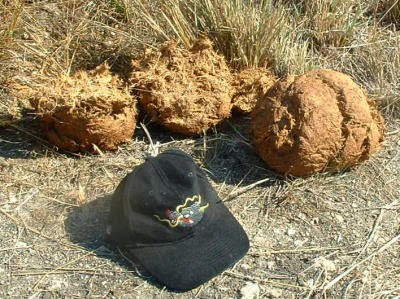
Elephants' poop is really, really big.
Way bigger than bears' dung.
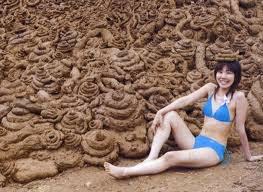
I can totally stack my poop. Can you?
You probably remember
wombat poop is cubical,
which makes it weirdly interesting.
and of course there's the infamous owl pellet, full of bones:
Most people think—don't touch poop.
But not everyone feels that way.
Like the lowly dung beetle.
True Fact.
Then there are these cuddly things. (Oh, cuties!)
The disgusting fact is that chinchillas (and rabbits) eat their own poop.
Ew.
Turns out there's a reason (not that it makes it any less gross)
As if that's not bad enough, some folks eat other folks' poop, and only they know why...
This is dried whale poop—apparently it's "waxy"...
I'll just take their word for that.
and this is the 8-year-old who found some dried whale poop and what happened to him... So the next time you find something really nasty on the beach, please bring it home. I'm serious.
I guess that person was the butt of someone's joke. Ha ha ha!
Well, I've about reached the end of my poop knowledge now. Some may say this post really stinks, but I don't give a fart for their opinion—only yours—so let me know what you think.
Bonus educational experience:
(Apprendrez-vous les mots pour le caca, s.v.p., et déclarez de nouveau à moi):
and last but not least... the real life version of Le Petit Taupe.
Among all the mysteries of this island, there is one constant—
CACTI
All around the pirate compound they can be found: Tall cacti, small cacti,
cacti posing with animals that look like it,
cacti that look like cushions, cacti that ARE cushions, and chairs, and sofas...
(Okay, that last one isn't real)
But everywhere you look, there are cacti.
as far as the eye can see,
there are millions, and billions,
and trillions of cacti...
(also some very pretty mountains)
and as close as you're willing to look
Close...
...closer...
...Ouch!
Most of these prickly plants are Saguaro cacti, considered by the local Tohono O'odham to be a sort of People of the Desert, or at least respected members of their tribe. They believed the saguaros walked around at night.
The legend says that the first saguaro began life as a human baby who was abandoned by its mother, who never nursed her child. The infant, after following her in vain, finally sank into the earth and came up on a mountain slope as a giant cactus. >sob<
(The first Saguaro probably didn't look like this.)
Saguaros are thought to live for 200 or more years!!!
They can grow to over 40 ft high
They don't even grow their first arm until they are older than a whole human life!
Wow.
You go, Saguaro.
Please note: if you were a Saguaro, you would be less than 1" tall right now.
Here are two I saw with arms that made me smile:
The droopy arm was caused by the weather getting too cold for the cactus at some point.
By the way, check out that baby in the foreground. Probably a mere 50 years old.
Saguaros don't bloom until they are almost 70 years old.
That's almost as old as your grandparents.
When they do bloom, the flowers last only
one day and night, giving both day and nighttime creatures a chance to pollinate them.
Saguaros also give fruit. How many animals do you think eat the fruit? (Answer in a link below.)
Saguaros support lots of desert life—
run your mouse over things on these pages to learn more about








 small cacti,


 Get a load of its face closer up!


