More cheerful, or at least their fights sound more charming, are the tiny hummingbirds.
It's hard to get good pictures of them though.
blurry
less blurry but badly framed
Okay, no choice but to try to see them in action...
I can hear them, but maybe not see them.
Wait, one actually almost held still for a moment here!
Oh I give up!
What I was really hoping to see were quail—I love quail!
Alas, no luck for me, but the interwebs can oblige us...
They are so danged cute!!
Er... I mean... Majestic! That's it—majestic!
(hee hee hee, quail-head!)
One fine-looking Qouple.
They all remind me of my high school boyfriend Marcus, whom we called Old Quail-Head because he had one little bang just like a quail head-feather. I'll have to find a way to scan a picture so you can see what I mean, but for now, this guy below will have to do.
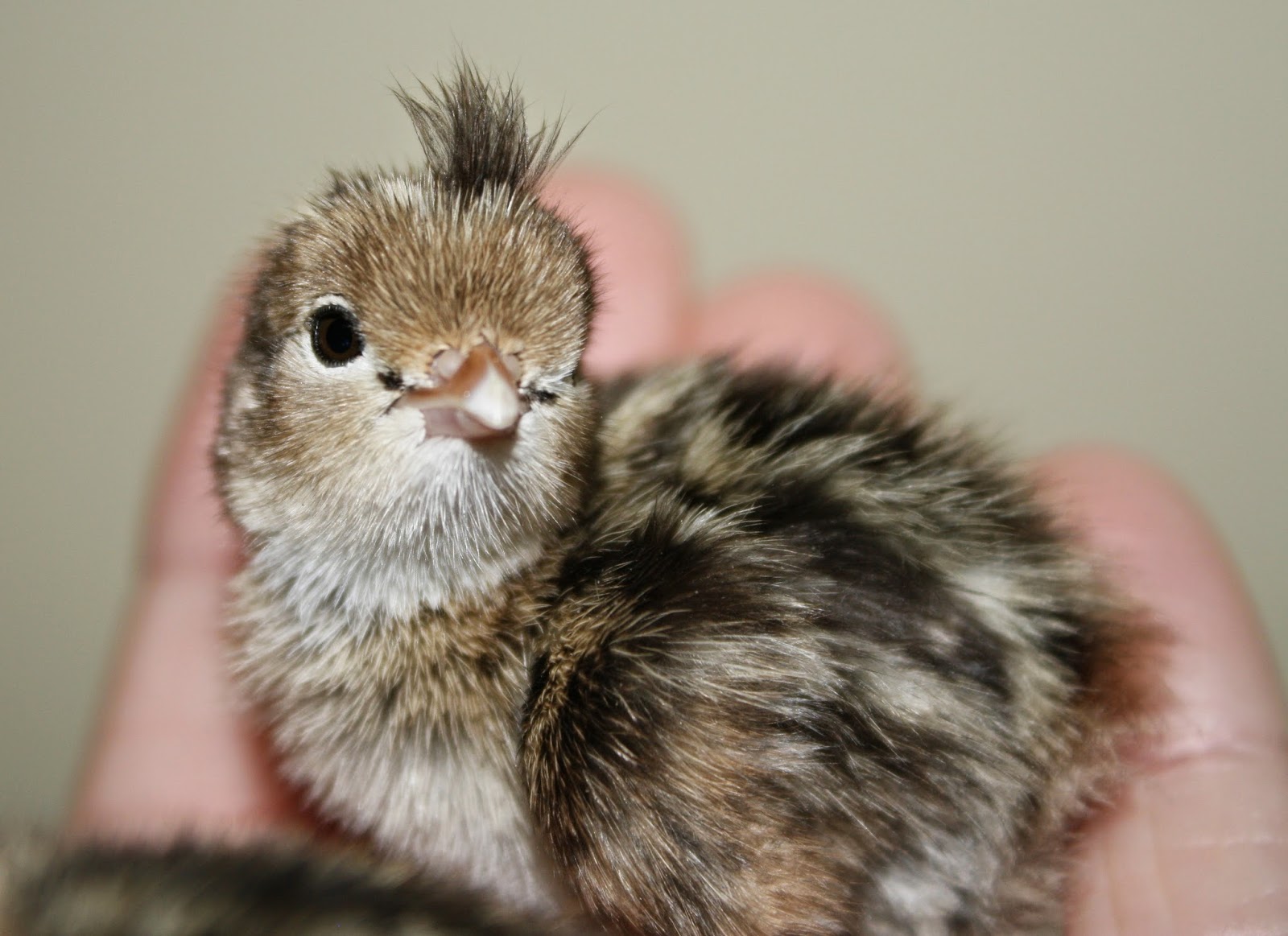
And here are some babies. Their mama is less than a foot long, so they must be 2" tops. Hee hee hee!
Here's where they live
Here's one on his or her mama's back!
(That looks like another child I know)
An independent fellow...
"I have a feather... coming!"
and one little honey showing off its head-tuft. Let's call him Peter Quince.
Awwwwww.... quailies! hummies! kestries! No, that last one doesn't work. Kestrels will eat these other guys if they can. Hmmmm.... maybe that cage isn't so bad after all!
A Menagerie of Mammalian Miscellany The desert is home to a wide range of mammals, many of which I also saw on my ramblings. These dudes are cool too! First the Arizona ruminants: Bighorn Sheep I kept having to tell myself they are sheep, not goats, until I finally learned the surprisingly big differences between sheep and goats, and particularly between mountain goats and bighorn sheep. Well anyway, here are the Bighorn Sheep. See if you can tell that they are sheep, not goats.
Among all the mysteries of this island, there is one constant—
CACTI
All around the pirate compound they can be found: Tall cacti, small cacti,
cacti posing with animals that look like it,
cacti that look like cushions, cacti that ARE cushions, and chairs, and sofas...
(Okay, that last one isn't real)
But everywhere you look, there are cacti.
as far as the eye can see,
there are millions, and billions,
and trillions of cacti...
(also some very pretty mountains)
and as close as you're willing to look
Close...
...closer...
...Ouch!
Most of these prickly plants are Saguaro cacti, considered by the local Tohono O'odham to be a sort of People of the Desert, or at least respected members of their tribe. They believed the saguaros walked around at night.
The legend says that the first saguaro began life as a human baby who was abandoned by its mother, who never nursed her child. The infant, after following her in vain, finally sank into the earth and came up on a mountain slope as a giant cactus. >sob<
(The first Saguaro probably didn't look like this.)
Saguaros are thought to live for 200 or more years!!!
They can grow to over 40 ft high
They don't even grow their first arm until they are older than a whole human life!
Wow.
You go, Saguaro.
Please note: if you were a Saguaro, you would be less than 1" tall right now.
Here are two I saw with arms that made me smile:
The droopy arm was caused by the weather getting too cold for the cactus at some point.
By the way, check out that baby in the foreground. Probably a mere 50 years old.
Saguaros don't bloom until they are almost 70 years old.
That's almost as old as your grandparents.
When they do bloom, the flowers last only
one day and night, giving both day and nighttime creatures a chance to pollinate them.
Saguaros also give fruit. How many animals do you think eat the fruit? (Answer in a link below.)
Saguaros support lots of desert life—
run your mouse over things on these pages to learn more about